You sat down to write the report. The important one. The one that actually matters.
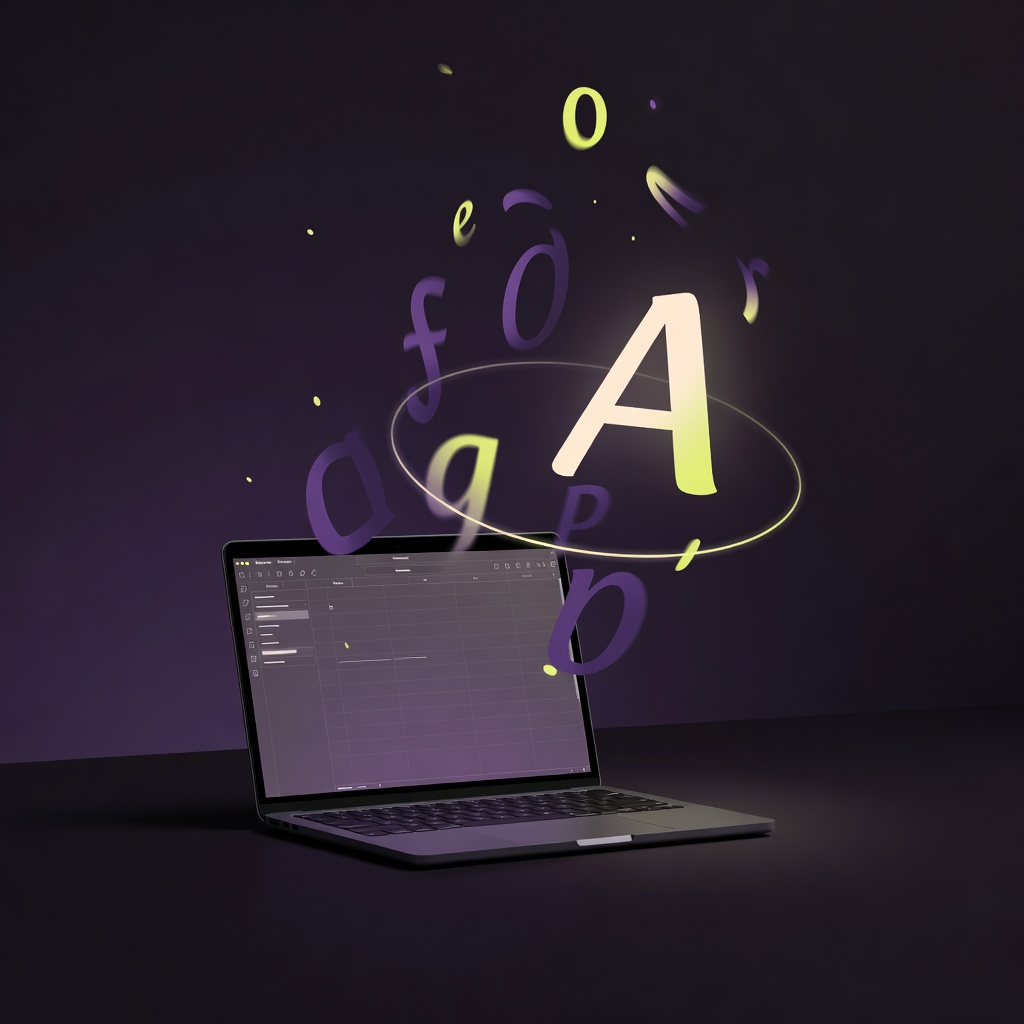
But first — which font?
Arial feels too corporate. Times New Roman feels like a college essay you never wanted to write. Helvetica feels like you're trying. Georgia feels warm, but maybe too warm? And now it's been 23 minutes and you haven't written a single word, but you have opened a website called "The 50 Best Fonts for Professional Documents" and you are deep in it.
Congratulations. You've been taken hostage. By a font.
Your Brain Has a Battery. Fonts Are Draining It.
Here's the thing nobody mentions when you're agonizing over serif versus sans-serif at 9 AM: every decision you make costs something.
Psychologists call it decision fatigue. The basic idea is brutally simple — your brain has a finite amount of decision-making energy each day, and it doesn't distinguish between important decisions and completely ridiculous ones. It burns fuel either way.
Choosing between Arial and Georgia? Fuel burned. Choosing between a $4 coffee and a $5 coffee? Fuel burned. Deciding whether to reply "sounds good" or "sounds great" to an email? Fuel burned.
By the time you get to the decisions that actually matter — the strategic call, the difficult conversation, the creative work that requires your full brain — you're running on fumes. And you're wondering why you feel exhausted before lunch.
You didn't have a hard morning. You had a hundred tiny hard mornings stacked on top of each other.
The "Stupid" Decisions Are the Sneaky Ones
Big decisions feel like big decisions. You know when you're wrestling with something important. You brace yourself. You allocate mental energy accordingly.
Small decisions don't announce themselves. They just quietly queue up, one after another, each whispering "this will only take a second" — and technically, each one is right. It only takes a second. The problem is you're making approximately four hundred of them before noon.
What should I have for breakfast? Should I answer this email now or later? Which tab should I open first? Is this sentence too casual for this client? Should I schedule that meeting for Tuesday or Wednesday? What font should this document be in?
None of these feel significant. All of them cost you something. And the bill arrives exactly when you need your brain most.
Why "Perfect" Is Not Your Friend
There's a particular kind of decision fatigue that hits creative and professional people especially hard, and it has a name: perfectionism disguised as diligence.
It feels responsible. It feels like you're taking your work seriously. You're not just picking any font — you're picking the right font, because you care about quality, because details matter, because you are a professional.
But let's be honest about what's actually happening.
You are not a typography expert. Your client is not a typography expert. Nobody reading your quarterly report is going to think "Arial. Interesting choice. Bold." They are going to read the words. The words you haven't written yet because you're still on the font selection screen.
Perfectionism, in these moments, is not about quality. It's about avoiding the actual work by pretending to do the actual work. It feels productive. It has none of the results of productivity. It is the wolf in productivity's clothing.
And the cruelest part? The energy you spend chasing perfect on the small stuff is the exact energy you needed to do something genuinely excellent on the big stuff.
The Decision That Doesn't Need to Be Made Twice
Here's what high-functioning people figured out a long time ago, and what every productivity book eventually says in slightly different words:
The best decision for a small problem is a fast decision.
Not a random decision. Not a careless decision. A fast one. Because for low-stakes choices, the cost of deciding slowly almost always outweighs the benefit of deciding perfectly.
Barack Obama wore the same style of suit every day. Mark Zuckerberg has his grey t-shirt situation. These aren't quirks — they're strategies. Eliminate the decision entirely, and you never pay the tax.
You don't have to go full capsule wardrobe to apply this. You just need to recognize which decisions in your life are eating resources they don't deserve.
A Practical Guide to Escaping the Font Hostage Situation
1. Set your defaults and defend them.
Pick a font. Pick one. Right now, if you have to: Calibri. Done. Make it your default — your permanent, non-negotiable, never-revisited default. The next time your brain tries to reopen that negotiation, you have a policy. Policies don't require energy. Policies just are.
Apply this logic everywhere you can. Default coffee order. Default lunch on busy days. Default email sign-off. Every default you set is a decision you never have to make again.
2. Give small decisions a time limit.
If it's a low-stakes choice, you get 30 seconds. Set a timer if you need to. When it ends, you pick the best option currently in front of you and move on. Not the perfect option — the best available option. These are different things, and confusing them is how you end up on a font review website for half an hour.
3. Recognize "good enough" as a skill, not a compromise.
"Good enough" is not laziness. It's the sophisticated recognition that beyond a certain point, additional effort produces diminishing returns — and the energy you save has real value elsewhere.
A document in a perfectly chosen font that took three hours to pick is not better than a document in Calibri that took three minutes. It's arguably worse, because the writer was exhausted by the time they got to the actual writing.
4. Front-load your important decisions.
Your brain is freshest early. This isn't motivational advice — it's cognitive science. Use your sharpest hours for your sharpest problems. Do not spend them on fonts, email formatting, or what to order for lunch. Push those to the afternoon, when your brain is already in coast mode and the cost of a slightly suboptimal sandwich is essentially zero.
5. Ask: "Will this matter in a week?"
Simple filter, and it works. Will the font choice matter in a week? No. Will the structure of your argument matter in a week? Yes. That's where your energy goes.
The Report Is Waiting
The font, for the record, does not matter.
The report matters. The idea inside it matters. The clarity of your thinking, the strength of your argument, the solution you're proposing — that's what anyone will remember, evaluate, or act on.
None of that gets written while you're auditing font options.
Pick Calibri. Or Arial. Or literally anything with letters in it. Set it as your default so you never have to think about it again. Then write the thing you actually sat down to write — with the full, uncompromised, un-drained brain the work deserves.
The font will be fine.
The work, if you protect your energy for it, can be genuinely great.
That's a trade worth making.