Cloudflare's 80% Token Cut: Why Markdown Matters for AI Search
BACKGROUND
Imagine feeding your website to an AI crawler bloated with code that drowns out your message in a sea of digital noise. Now picture slashing that load by over 80%—delivering pure, potent content straight to the source. This isn't sci-fi; it's Cloudflare's bold leap into AI search optimization (AEO).
On February 12, 2026, Cloudflare — which powers roughly 20% of the web — announced a feature called Markdown for Agents. The feature automatically converts HTML pages into clean Markdown format when the requesting client is an AI agent, using standard HTTP content negotiation headers.
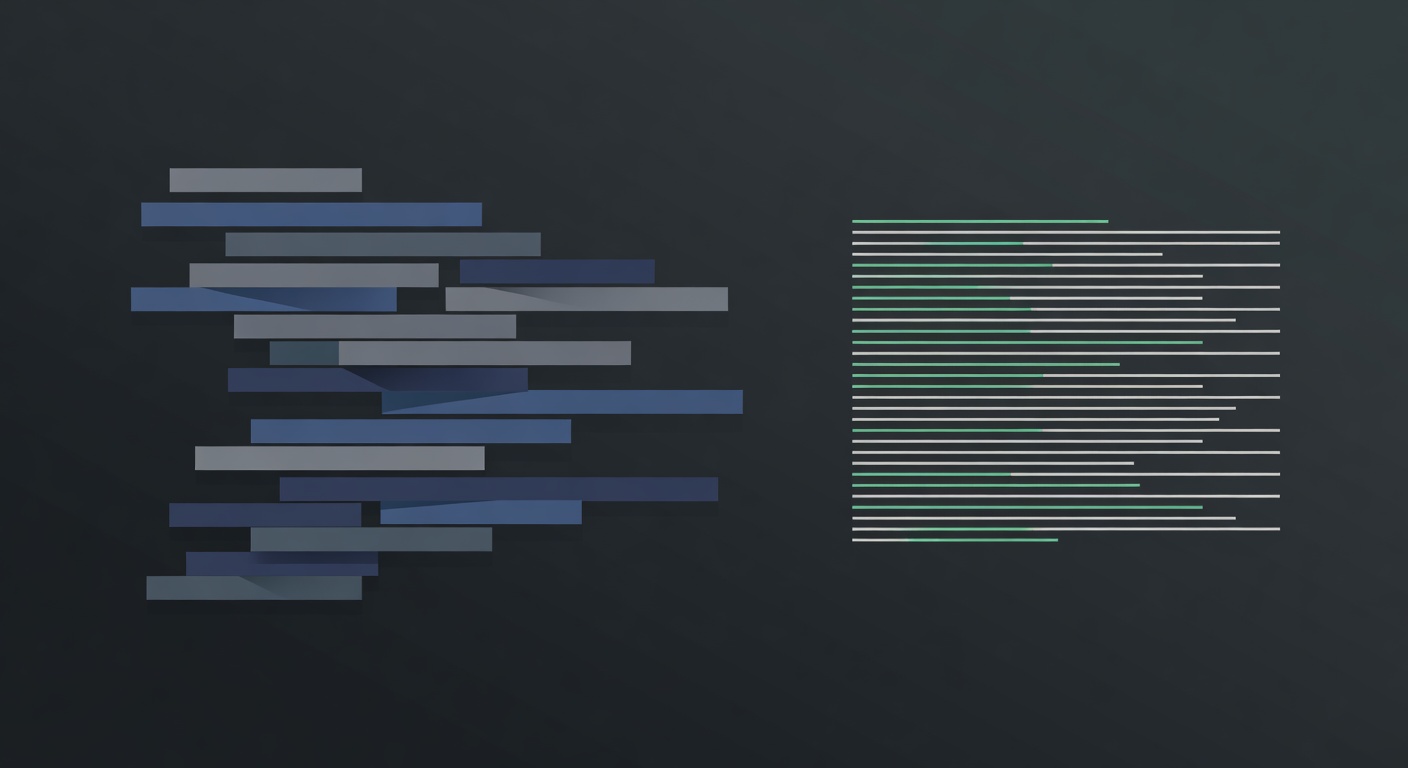
The announcement included a direct performance benchmark: Cloudflare's own blog post, when delivered as standard HTML, required 16,180 tokens to process. The same content delivered as Markdown required 3,150 tokens — an 80.5% reduction.
This post examines what that figure represents, why the gap exists, and what the practical implications are for businesses whose sites are currently being read by AI systems.
WHY HTML PRODUCES TOKEN OVERHEAD
Large language models process text as tokens — discrete units of text, roughly equivalent to three-quarters of a word on average. Every character an LLM ingests consumes part of its context window and incurs processing cost.
A standard HTML webpage contains far more than its visible content. Before a single sentence of body text is reached, a typical page includes:
- DOCTYPE declarations and meta tags
- <div>, <section>, <nav>, <header>, <footer> wrappers
- Inline CSS class attributes
- JavaScript bundle references and analytics scripts
- Cookie consent and GDPR banner code
- Navigation menus, breadcrumbs, sidebar elements
- Social sharing widgets and tracking pixels
None of this is content. For an LLM, it is noise — but it must still be parsed and tokenised before being discarded.
Cloudflare's own analysis illustrates the per-element cost: a simple heading in Markdown costs approximately 3 tokens. The HTML equivalent, including surrounding tag syntax, consumes 12–15 tokens before any additional structural markup is factored in.
Across a full page, these costs compound. A site with 20 pages, each carrying the same overhead ratio, delivers over 260,000 tokens of structural waste per full crawl.
WHAT MARKDOWN ELIMINATES
Markdown is a lightweight plain-text format that represents document structure — headings, paragraphs, lists, links — using minimal syntax. An LLM reading Markdown receives only the information hierarchy and the content itself.
When Cloudflare converts a page at the network edge, it strips rendering infrastructure and delivers a document that contains:
- Headings as # prefixes (1–2 tokens)
- Paragraphs as plain text blocks
- Links as [text](url) notation
- No scripts, no style declarations, no layout containers
The 16,180-to-3,150 reduction in Cloudflare's benchmark is not an outlier. It reflects the structural reality of how HTML pages are built: the majority of their byte weight is presentation logic, not information.
THE LIMITATION OF CLOUDFLARE'S APPROACH FOR MOST BUSINESSES
Cloudflare's Markdown for Agents feature converts HTML at the network edge — meaning the original website must be served through Cloudflare's infrastructure, and the conversion happens on the fly.
This is an efficient solution for large web properties with direct infrastructure control. For small and medium businesses on closed platforms — Kajabi, GoHighLevel, standard WordPress hosting — it presents a practical constraint. These platforms do not expose the network-level controls required to implement edge conversion, and the underlying HTML remains bloated by default.
There is also a separate problem edge conversion does not address: completeness and accuracy of content. Converting a cluttered webpage to Markdown still produces a converted version of that page — including navigation text, footer copy, promotional CTAs, and other elements that are irrelevant to an AI's core question: what does this business do, where is it, and should I recommend it?
A MORE DIRECT APPROACH: THE PATH B SUBDOMAIN
Rather than converting an existing cluttered site, the alternative is to build a dedicated machine-readable layer from scratch — a subdomain serving only structured, pre-cleaned Markdown files alongside an llms.txt index.
This layer contains exactly what AI agents need: company name, services, location, credentials, pricing structure, and entity details — authored directly in Markdown, with no conversion step required.
When an AI crawler encounters a site with this layer in place, it bypasses the main website entirely. Token load per session drops to the minimum required to transfer the actual facts. There is no overhead to strip because none was ever added.
The result is functionally equivalent to Cloudflare's 80% reduction — but achieved through clean data authorship rather than post-conversion processing, and accessible to any business regardless of their hosting platform.
SUMMARY
Cloudflare's benchmark is precise and reproducible: HTML carries approximately 5x the token weight of equivalent Markdown content. The infrastructure cost of this overhead scales with crawl frequency and the number of pages processed.
For businesses operating on platforms that cannot implement edge-level conversion, a separately authored machine-readable layer achieves the same outcome — and offers the additional advantage of controlling exactly what AI systems read about the business, rather than inheriting whatever the main website happens to contain.
The 80% figure is not a target to work toward. It is the baseline that clean data infrastructure delivers from day one. In the world of AEO, token efficiency isn't optional—it's your edge in the AI search revolution.
🌿 Smoothly Digital deploys dedicated machine-readable data layers for small and medium businesses — clean Markdown, structured entity data, zero conversion overhead. If you'd like to benchmark your current site's token load, get in touch.